5 Takeaways from City Nation Place That Are Shaping the Future of Place Branding
May 04, 2026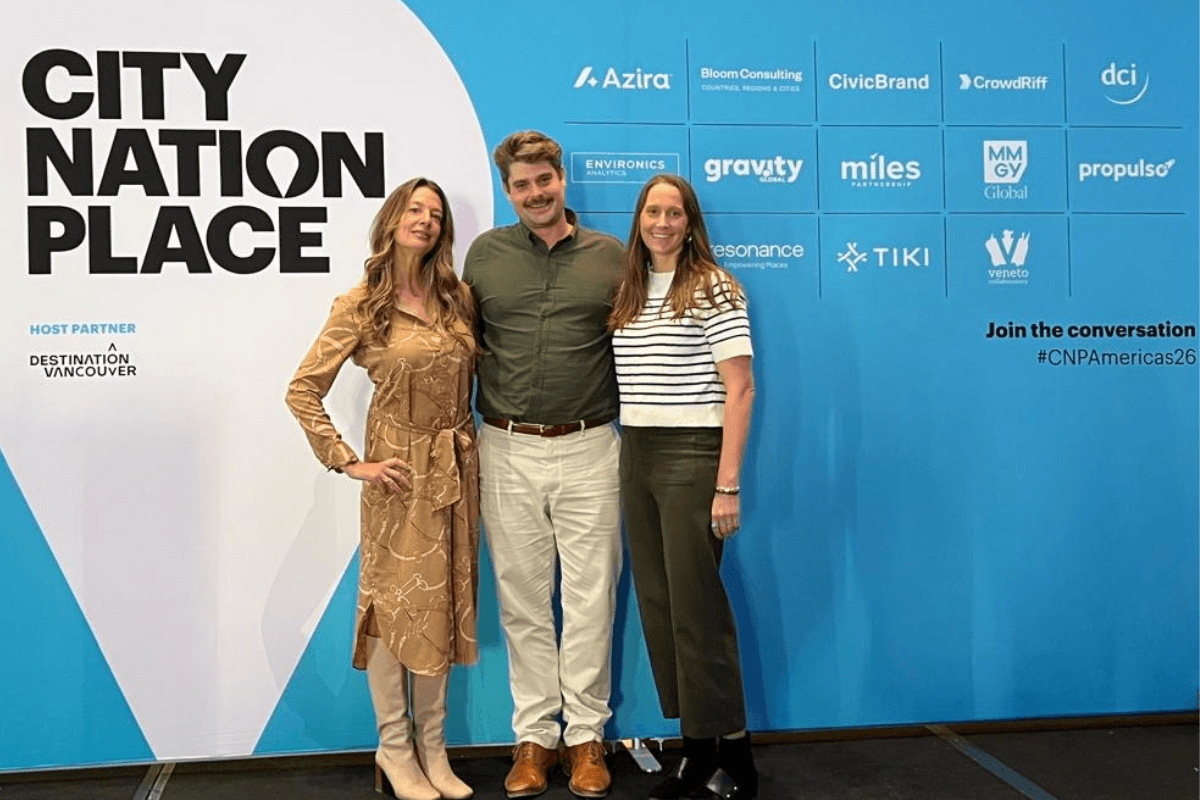
Across conversations with destinations from around North America at this year’s City Nation Place Americas conference, three clear place branding themes shaping the future emerged: sharper alignment, stronger narratives and research-led strategy.
This year’s conference drove home the importance of unified brand architecture across economic development talent and tourism, and made it clear that long-term narrative discipline carries more weight than short-term campaigns or one-off messaging.
Here are five takeaways our team is bringing back, and what they mean for economic development leaders.
1. Alignment Beats Perfection
The clearest theme across conversations was the need for intentional alignment and a more disciplined approach to working together. When tourism, economic development and workforce attraction operate in silos, too many opportunities are lost. The most common challenge facing places today is not visibility, but fragmentation.
The destinations gaining traction are aligning around a shared narrative while maintaining distinct roles. For One Spartanburg Inc., that alignment is already well underway, with partners working from a unified vision and reinforcing one another’s efforts across initiatives.
Others are actively moving in that direction. The Greater Oklahoma City Chamber is in the midst of a rebrand, with President and CEO Christy Gillenwater emphasizing the importance of being deliberate in that process. “We didn’t just merge everything. We aligned,” she said.
For Economic Development Winnipeg, that alignment creates a competitive edge. President and CEO Ryan Kuffner noted that breaking down silos allows tourism and economic development to draw from each other’s strengths in a more strategic way.
This kind of coordination strengthens recognition, builds credibility and creates sustained momentum. When alignment is missing, even strong efforts compete with one another, weakening the overall story and limiting results.
Remember: “If we’re all saying different things, all we are creating is noise.”
2. Research Matters
Perception shapes decisions long before data or incentives enter the picture. It influences where people travel, where they choose to live and where businesses decide to invest. That is why perception must be treated as a standing KPI rather than a secondary consideration. Ongoing research is essential to understand what people believe, identify barriers and track how those beliefs shift over time.
The destinations gaining ground are not guessing. They are consistently measuring perception, using those insights to refine their narrative and focusing their efforts where it will have the greatest impact. Without that foundation, it becomes far more difficult to change minds or compete effectively. Invest Puerto Rico conducts perception studies every two years to monitor shifts and calibrate strategy.
“We stopped reacting and started rebalancing,” said Nicole Vilalte, Invest PR’s Chief Marketing Officer. “Don’t assume what your issue is. Don’t put years of work against the wrong problem.”
3. Residents Are the #1 Stakeholder
Residents shape the experience of a place every day. They carry its stories and influence perception in ways no campaign can replicate.
The most effective strategies create space for residents to participate through ambassador programs, storytelling platforms and accessible tools. These efforts build authenticity and strengthen connection.
Pride cannot be manufactured (hard as we try!). It develops through lived experience and shared ownership, and it is essential to long-term success.
4. Ruthless Consistency Wins
One of the clearest—and most challenging—disciplines is to pick a story and stick to it. The strongest place brands aren’t constantly reinventing themselves. They’re building a repeatable, adaptable narrative system and amplifying it over and over again, across every channel, partner and audience.
People need to hear something multiple times before it sticks. One campaign won’t change perception, but consistency will.
5. Empower Unexpected Storytellers
The most credible voices already exist within your community. Residents, newcomers, business owners and artists are the people audiences trust because their stories reflect real experiences and real perspectives.
What resonates most are not polished campaigns, but honest, lived moments. Authenticity is what creates emotional connection, and that connection is what shapes how people see and feel about a place. It gives audiences something they can recognize, relate to and picture themselves being part of.
Organizations like Explore Minnesota have embraced this approach by elevating real stories from real people in unscripted, documentary-style advertisements. Their work shows that the most effective narratives do not need to be manufactured. They come from listening first, then creating space for those stories to be shared in a way that feels natural and credible.
As we continually say at DCI, every place has a story. The role of place marketers is to uncover it, understand it and bring it forward. That starts by engaging directly with the people who call the place home and giving them the tools and confidence to share their experiences in their own voice.